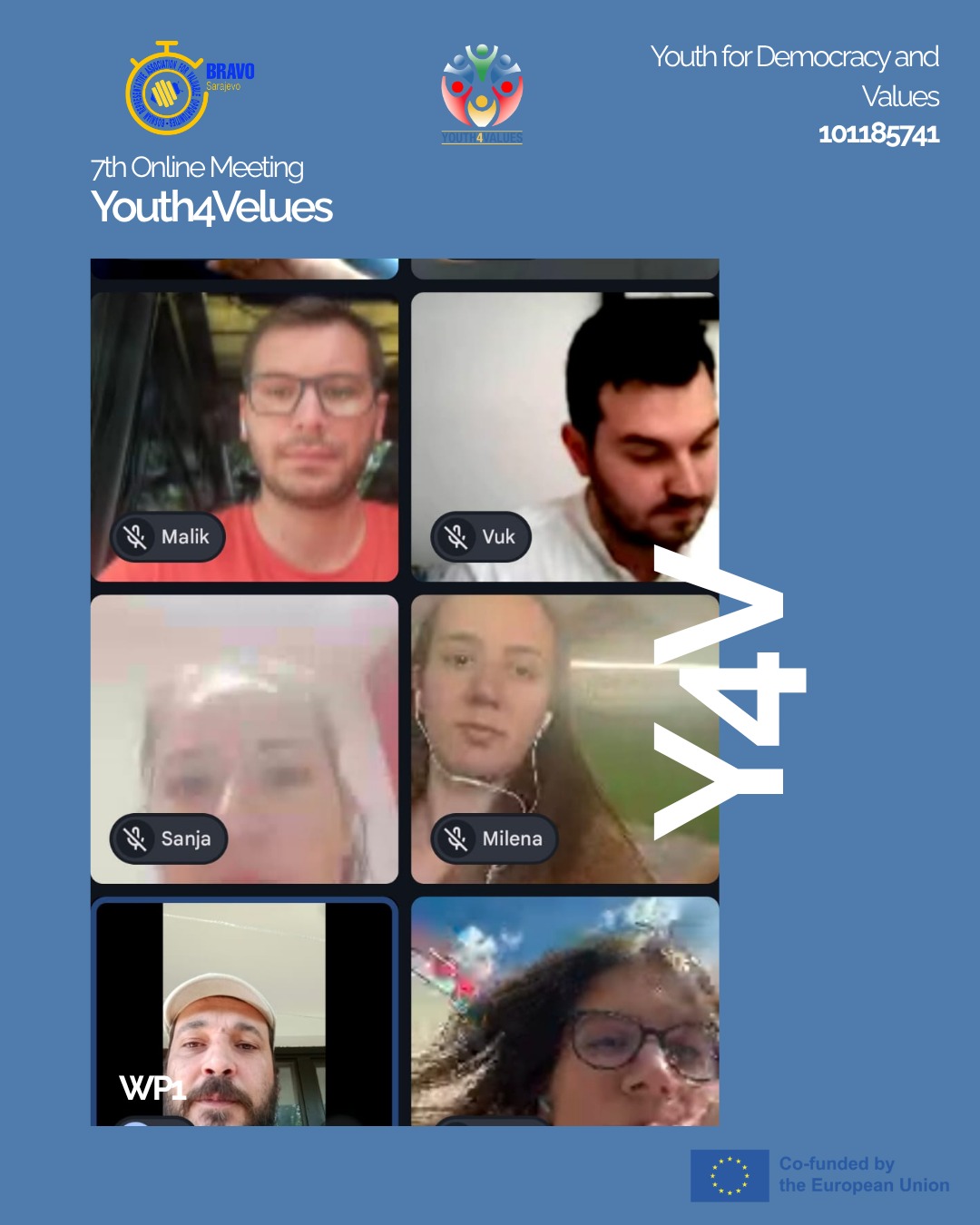
The seventh Youth4Values international meeting focused on building consensus around the main priorities emerging from the four National Action Plans. Participants reviewed areas of agreement and discussed where national differences required separate approaches.
Several common priorities were confirmed: stronger civic education; regular and transparent consultation of young people; better support for youth-led initiatives; inclusion of young people with fewer opportunities; improved cooperation between institutions and youth organisations; and clearer feedback after young people contribute to a public process. These themes reflected the project’s wider objectives of active citizenship, democracy, human rights and empowerment.
Participants also discussed the meaning of consensus in an international project. They agreed that consensus does not require every country to use identical structures or wording. It means agreeing on shared principles while allowing implementation to reflect national legislation, institutional capacity and local needs.
This distinction helped the groups protect the relevance of their national plans while preparing for a joint European-level document.
The meeting used collaborative decision-making methods to rank priorities and resolve differences. Participants explained their positions, listened to alternative views and searched for formulations that could represent the whole network. Particular attention was given to avoiding tokenistic participation and ensuring that young people are involved in planning, implementation and evaluation, not only invited to approve decisions made by others.
The process strengthened trust between the national groups and demonstrated democratic practice in action. Through compromise, dialogue and shared responsibility, participants created a coherent foundation for the next stage: translating national priorities into common European recommendations.