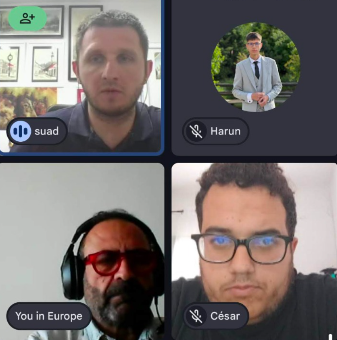
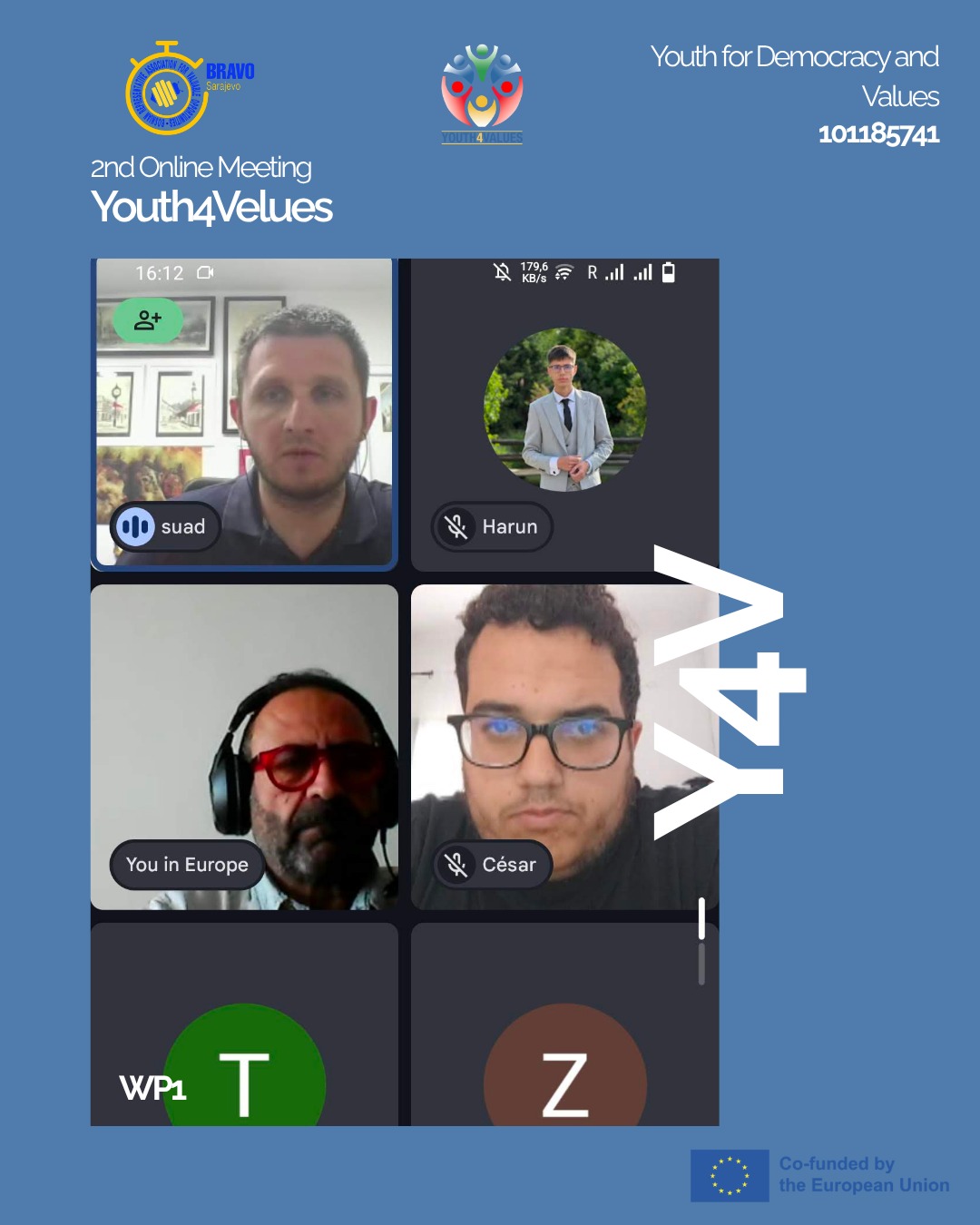
The second international Youth4Values meeting focused on the national realities that shape youth participation in Bosnia and Herzegovina, Montenegro, Greece and Spain. Each group presented the main findings from its local discussions and reflected on how political, social and institutional conditions influence the willingness of young people to become active citizens.
Participants from Bosnia and Herzegovina highlighted low trust in institutions, limited consultation of young people and the absence of consistent mechanisms through which youth proposals can enter formal decision-making. The Montenegrin group discussed the gap between existing legal frameworks and the practical influence of youth councils and other advisory bodies. Participants from Spain reflected on the decentralised character of youth policy and the need for stronger coordination, while the Greek group spoke about the limited systematic measurement of youth participation and the importance of making existing participation structures more accessible.
The discussion did not focus only on barriers. National teams also shared examples of practices that can encourage participation, including local youth councils, volunteering programmes, petitions, public consultations, school-based civic initiatives, youth parliaments and cooperation between municipalities and civil society organisations. Participants examined which of these mechanisms create genuine influence and which risk becoming symbolic activities without a clear follow-up process.
A key conclusion was that participation must be meaningful, continuous and connected to decisions that affect young people’s lives. The groups agreed that one-off consultations are not enough. Young people need understandable information, safe spaces for dialogue, feedback from institutions and clear evidence that their contribution has been considered. The meeting also underlined that digital participation can expand access, but it should complement rather than replace face-to-face civic engagement.
The national perspectives gave the participants a stronger evidence base for their Action Plans. They also showed that, despite different systems and levels of democratic development, the partner countries share a common need: stronger bridges between young people, youth organisations and decision-makers.